
"Gamify Learning: The Ultimate List of Coding Games for Kids"
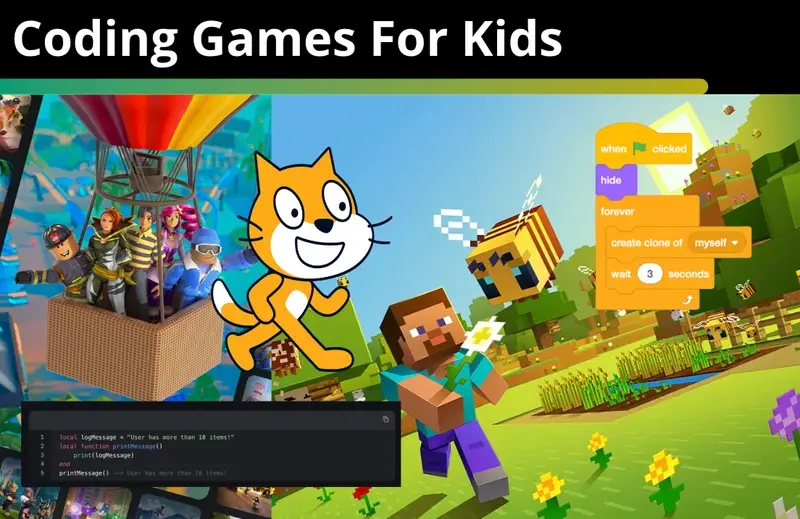
Coding Games for Kids: The Fun and Interactive Way of Learning How to Program
In today’s age of technology, learning to code has become an essential skill for kids. Be it creating apps, building websites, or making video games, coding is the foundation of much of the technology we use every day. But learning to code bores or scares off many kids. That is where coding games come in. By combining education and entertainment, coding games offer a playful way for children to grasp fundamental programming concepts while having fun.
Why Should Kids Learn to Code?
Before diving into the world of coding games, let’s briefly explore why coding is so important for kids:
- Critical Thinking and Problem-Solving: Coding teaches kids to break problems into smaller, manageable steps and think logically.
- Creativity and Innovation: By learning to code, kids can create their own projects, i.e., build a game or a website, which fosters creativity.
- Confidence: As children learn to code and resolve challenges, they build the sense of accomplishment and self-confidence.
The Use of Coding Games
Although the benefits of coding are obvious, how do we engage children? Enter coding games—interactive platforms that learn programming concepts through the vehicle of fun, gamified exercises. These offer kids an introduction to programming logic, syntax, and even algorithmic thought without the feeling of a boring lecture or textbook problem set.
Some of the most well-known coding games and platforms that make learning programming enjoyable and effective are:
- Scratch (8-16 years)
Scratch is the largest platform to teach children coding. MIT created Scratch that allows children to create and make their own interactive stories, games, and animations with block-based code. The visual interface makes it easy for the newbies to learn the vocabulary like loops, conditionals, and variables.
- Why it works: Scratch achieves coding accessibility by eliminating the typing of complex code. Kids simply drag and drop code blocks to get their characters to move and animate.
- What kids learn: Sequencing, logic, problem-solving, and creativity. Scratch also fosters collaboration since kids can share and remix projects.
- CodeCombat (Ages 10+)
CodeCombat learns coding differently by placing programming in a fantasy game setting. Kids can use real code (Python, JavaScript, etc.) to program their characters, so they are writing real programming languages when they play.
- Why it works: CodeCombat teaches kids to generate real code, giving them a better idea of how programming works. The game progresses through levels, with kids being given increasingly difficult problems to solve.
- What children learn: Syntax, programming languages, algorithms, and logic. CodeCombat also teaches students about debugging basics, so kids learn to debug their code.
- Tynker (Ages 7-12)
Tynker has a lot of coding games, puzzles, and courses suitable for children at different ages. From block-based coding for young children to text-based coding for older children, Tynker has it all covered. The site also allows children to create their own games and applications, which makes learning more interactive.
- Why it works: Tynker combines learning and fun with game-like tutorials and challenges. It adds increasing complexity to the challenges so that kids can learn at their own paces.
- What kids learn: The basics of coding, game making, app development, and problem-solving.
- LightBot (Ages 6-10)
LightBot is an educational puzzle game that introduces kids to programming logic without requiring them to write code. The game necessitates that kids teach a robot how to move through a maze of mazes using commands that are based on real programming concepts.
- Why it works: LightBot makes programming easier by incorporating a visual interface and logic puzzles. It educates on such concepts as sequencing, loops, and conditional statements in such a manner that is easy to grasp.
- What they learn: Logical reasoning, ordering, and the fundamentals of programming algorithms.
- Kodable (Ages 5-9)
Kodable is a great way to introduce coding to young kids. The game uses a delightful, cartoon-like interface where kids construct puzzles by coding tiny characters named “Fuzzes” to navigate mazes. It starts with simple concepts like loops and conditions and increasingly talks about more complex issues.
- Why it works: The colorful and playful look of Kodable makes learning code basics fun for kids. The game gives children the freedom to learn at their own pace, which is perfect for newbies.
- What kids learn: Basic programming concepts such as commands, loops, sequencing, and conditional logic.
- Blockly Games (8+)
Blockly Games is a set of educational games that teach programming using Blockly, a visual programming language. Kids learn puzzle-solving by linking blocks of code, so it is an excellent way to introduce the concepts of logic and programming flow.
- Why it works: Blockly Games teaches basic programming concepts without requiring children to write code. It is an excellent place to begin before venturing into text-based programming languages.
- What children learn: Logic, problem-solving, sequencing, loops, and conditional statements.
Benefits of Coding Games for Kids
- Involvement: Kids are more likely to stay interested in learning when it is wrapped in a game package. The challenges, rewards, and progress levels make the process exciting and fascinating.
- Learning Through Play: Gamification is a powerful way of motivating learning to be enjoyable and effective. It creates a sense of achievement as children progress through levels, unlock new challenges, and see results of their work in real-time.
- Self-Paced Learning: Most programming games allow kids to learn at their own pace, which can foster confidence without frustration. Kids can spend whatever time required to become proficient at tricky ideas, and zip through areas that are a breeze.
- Real-World Application: Most coding games instruct real coding languages and problem-solving methods used in commercial development, teaching meaningful skills to the children that they will be able to apply in the future.
Conclusion
Coding games for kids give a playful and simple way for children to learn how to code. Using fun, imagination, and learning, these websites give children the foundation of programming, helping them to be more prepared for a career in tech and beyond. Whether creating interactive stories, puzzles, or games, coding games help build skills that go beyond programming, such as critical thinking, collaboration, and perseverance.
So why not let your child get a head start on coding today?
With the many enjoyable and learning-rich coding games available, coding can be as fun as playing their favourite games.