
How Learning Takes Place Through Play: Releasing the Power of Fun
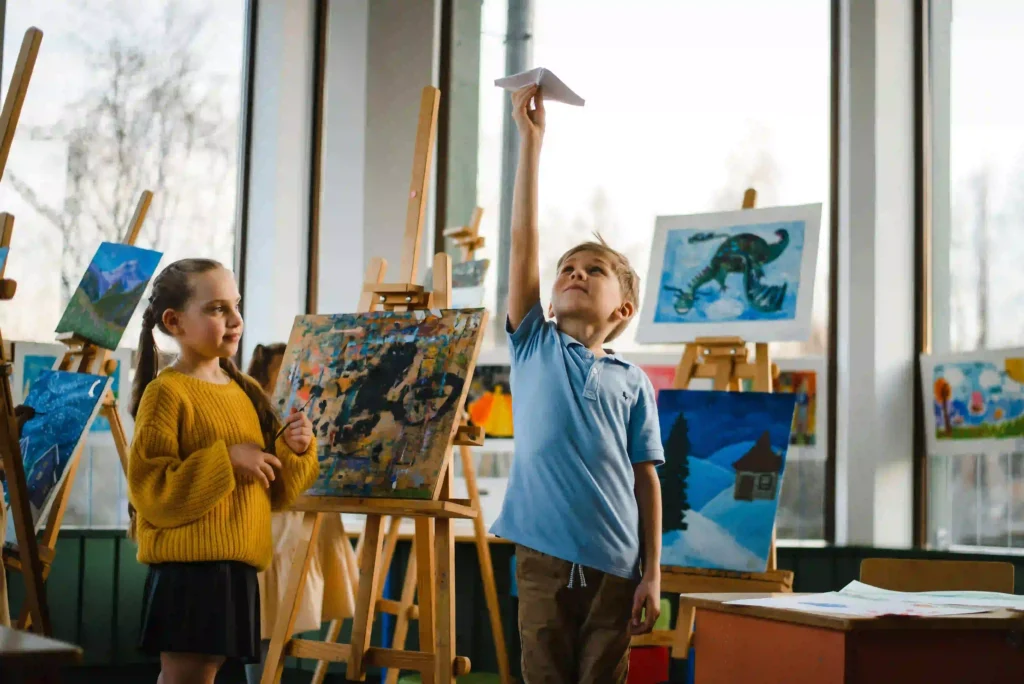
Imagine a colorful playground in which children are not just running from one location to another, but learning the world game one at a time. Play-based learning is not only enjoyable—actually, it’s a phenomenal process that shapes the way we learn, think, and gain emotional intelligence. As a parent, teacher, or just an inquisitive person, recognizing this natural, joyful method of learning can revolutionize our very method of education.
The Magic Behind Play and Learning
Play engages several senses, encourages exploration, and stimulates imagination. When children build with blocks, they are not just stacking shapes on top of each other; they are learning basic physics and spatial awareness. When they pretend to be shopkeepers or astronauts, they are practicing language, sympathy, and social skills, without a plan.
When children play, they are not just passing time; they are experimenting, problem-solving, and discovering how things work. Building with blocks teaches balance and structure. Pretending to be a chef, astronaut, or teacher builds creativity and empathy. Outdoor play sharpens coordination and awareness. Every playful moment is a lesson in disguise.
The magic of play lies in its effortless blend of joy and discovery. Children develop cognitive skills as they count, sort, and plan; social skills as they share, take turns, and cooperate; and emotional skills as they navigate challenges, express feelings, and build confidence.
Through play, learning becomes natural and lasting. It fuels curiosity, encourages imagination, and turns mistakes into opportunities. Whether through sensory play, STEM activities, or simple games, children develop the resilience and flexibility that prepare them for life’s bigger challenges.
Educators and parents play a crucial role in nurturing this magic – by providing time, space, and encouragement for children to explore freely. When we value play as a form of learning, we recognize that the most meaningful education does not always come from a textbook – it often begins with a child’s imagination.
Play is the bridge between knowledge and creativity, between curiosity and confidence. It is where learning feels like magic – and where the magic truly is learning.
Take Emma, a curious five-year-old who spent her afternoons creating stories with dolls. What seemed like simple imagination was – Emma experimenting with language, social roles, and emotional expression. Through play, she was rehearsing real-life interactions and gaining confidence to communicate effectively.
Why Play Is Such a Powerful Learning Tool
Active Engagement: Learning sticks when you’re involved. Play requires active participation rather than passive listening, making lessons memorable.
Safe Exploration: It allows experimentation and mistakes in a low-pressure environment where mistake is an inherent process in the learning.
Social Connection: There are negotiation, empathy, and cooperation built through playing together.
Intrinsic Motivation: Fun drives curiosity, encouraging learners to dive deeper without external rewards.
Real-Life Examples: Play in Action
Picture a math lesson where the numbers are learned while playing a game of “store.” Students buy and sell objects, practicing addition and subtraction as well as decision-making, using play money in an interactive, engaging environment. Instead of memorizing facts, they understand why it’s necessary.
At home, a parent can use cooking as play—measuring and following a recipe. An easy activity combines math, science, reading, and motor skills in one.
Bringing Play into Everyday Learning
Integrating play doesn’t mean removing structure; it means combining it with purpose. Teachers can design challenges that are game-like, yet learning opportunities, and parents can follow a child’s lead, introducing moments of exploration into the rhythms of daily life.
Recall Michael, who was shy and struggled with social skills. His teacher introduced cooperative games to recess, where he could practice communication and form friendships. Over time, Michael became more confident—all along the kind, powerful pathway of play.
In Conclusion: The Future of Learning Is Playful
Play-based learning is not an indulgence—it’s a necessity. It connects curiosity and development, turning learning into a natural, delight-driven process. When we embrace play, we honor the way people have always learned and lay the foundation for deeper understanding, creativity, and emotional resilience.
The next time you see a child fully immersed in play, remember: they’re not just having fun—they’re learning how to transform the world.