
Building Minds with Blocks
Genius is being built, toy by toy.
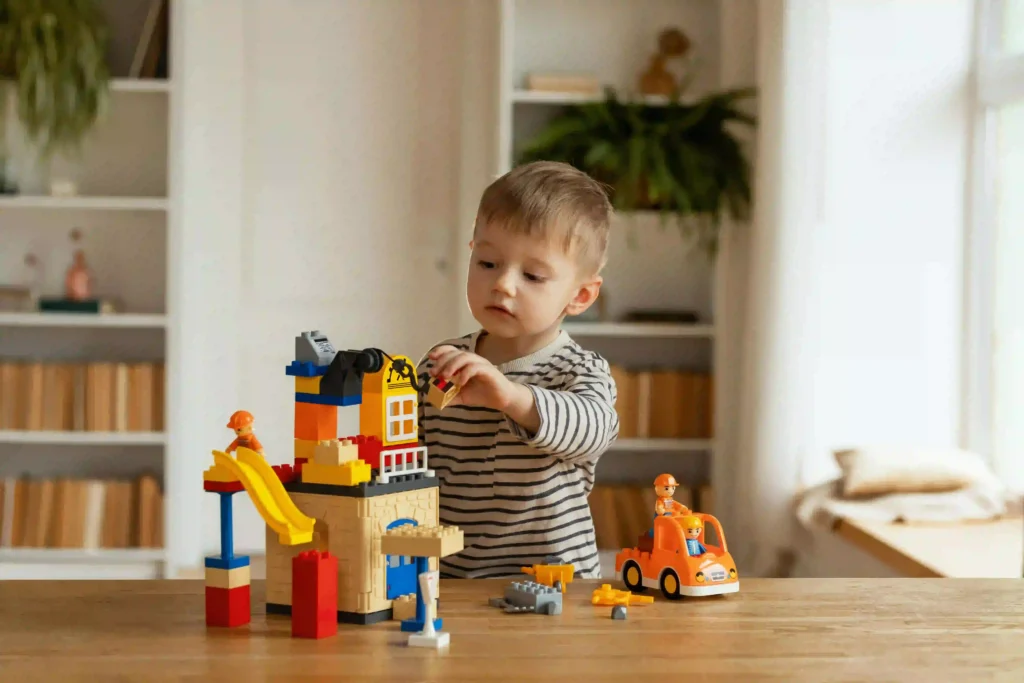
LEGO isn’t just a kid’s toy—it’s a cognitive powerhouse. When children build with LEGO, they’re developing spatial reasoning, architecture, and engineering.
It is a hands-on tool that inspires creativity, problem-solving, and engineering thinking from an early age. When children build with LEGO bricks, they are practicing the core skills that engineers use every day: planning, designing, testing, and iterating.
Each brick is an act of choice: What goes here? What supports that? How do I get this structure to stay up?
Problem-solving: Kids learn how to fix when their creations collapse or don’t look the way as they imagined.
Creativity: With no fixed outcome, LEGO encourages creative thinking—castles, spaceships, or cities in a child’s mind.
Perseverance: Trial and error promote perseverance. A mistaken attempt isn’t a failure—it’s a lesson learned.
Puzzles: The Silent Architects of Logic
Puzzles may appear simple, but they are extremely complex in what they require from the brain. Whether it’s a jigsaw, a Rubik’s Cube, or a logic grid, puzzles sharpen concentration and analytical logic.
Pattern recognition: Recognizing shapes, colors, and edges conditions visual discrimination.
Strategic thinking: Solving puzzles includes planning and sequencing—skills essential to math and coding.
Patience and attention: Puzzles in a quick-paced world slow things down, inviting mindfulness and sustained attention.
Pretend Play: The Theater of Social Intelligence
Dress-up clothes, play cooking stoves, action figures—these are not props; they are tools of empathy and communication. Pretend play allows children to engage in other roles and scenarios, building social and emotional competence.
Perspective-taking: Taking on “teacher” or “doctor” for a minute teaches children about others’ feelings and points of view.
Language development: Role-playing stimulates conversation, storytelling, and language development.
Conflict resolution: Negotiating roles and storylines fosters compromise and collaboration.
Why It Matters
The games that we offer children aren’t for wasting time—they’re for shaping minds. With every block laid, puzzle solved, or tea party hosted, children are laying the groundwork for critical thinking, creativity, and connection.
LEGO helps children develop the critical thinking, creativity, and technical skills that lay the foundation for a future in engineering. As they plan and construct, children learn to analyse problems, experiment with solutions, and adapt when things don’t go as planned. They develop spatial reasoning and an understanding of structural principles, learning how balance, symmetry, and mechanics work in the real world. Free play with LEGO sparks imagination and innovation, encouraging children to design new inventions, combine pieces in unique ways, and see the possibilities in every challenge.
Beyond technical skills, LEGO builds patience, persistence, and resilience – essential traits for budding engineers who must test, revise, and improve their designs. Collaborative LEGO projects also teach communication, teamwork, and leadership, as children discuss ideas, negotiate solutions, and work together to bring complex creations to life.
Through LEGO play, learning becomes hands-on, joyful, and purposeful, giving children a strong foundation in problem-solving, creativity, and engineering thinking that can grow with them into adulthood.
So the next time you see a child immersed in play, remember this: genius is being built, toy by toy.